

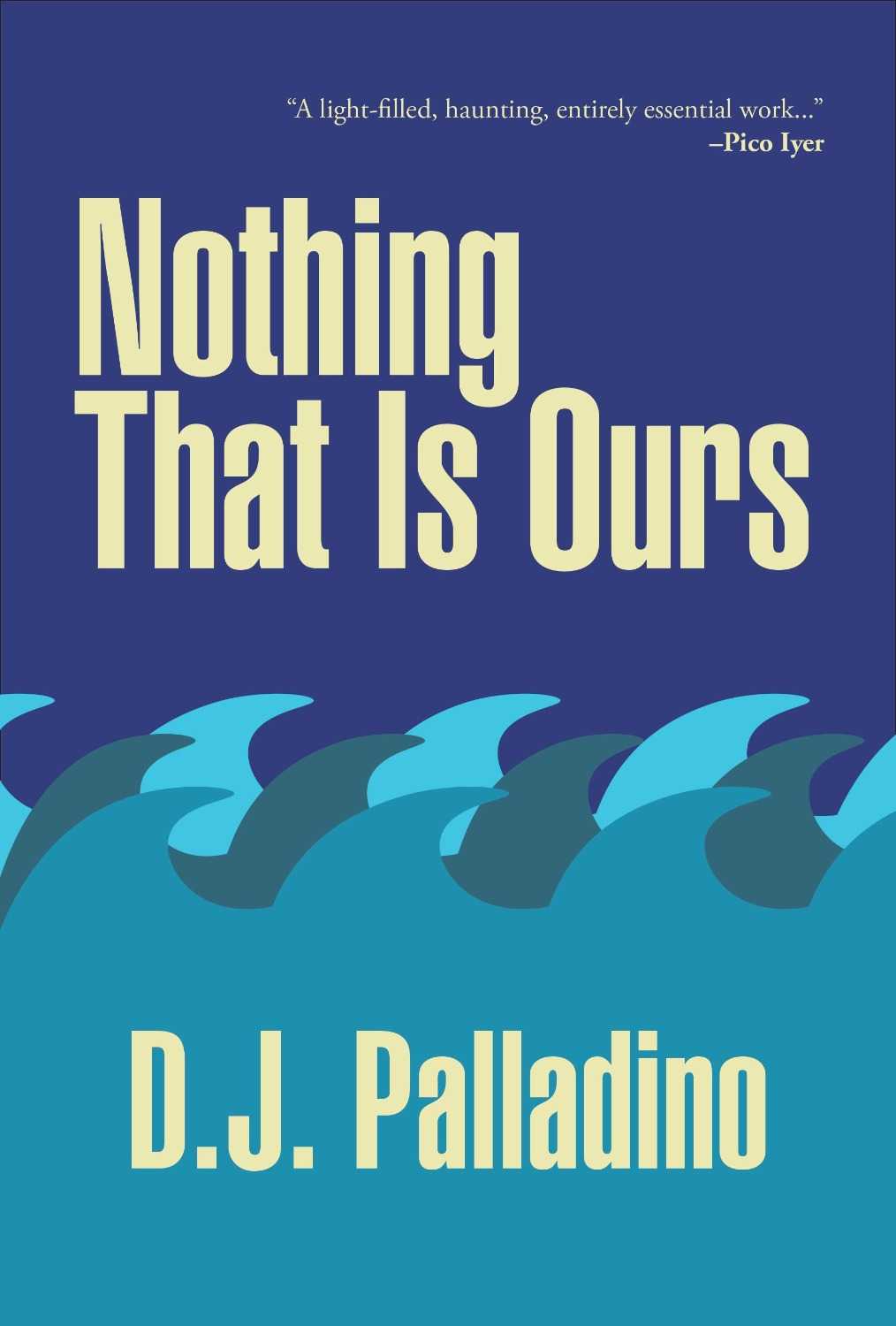
D.J. Palladino
Nothing That Is Ours (Paperback)
$19.95
On a gray winter day in 1958, the body of a man washes up on Santa Barbara’s breakwater. He has wounds much like those of the crucified Christ. Trevor Westin, a young writer with deep family connections to the city, sees murder where the local press and powers that be see only a simple case of drowning. Trevor goes on a dangerous search for answers. Along the way he will cross paths with beatniks, beach bums, Aldous Huxley, Dennis Hopper, and agents from the CIA. He will also be introduced to the brave new world of hallucinogenic drugs. Meanwhile, off the coast of Santa Barbara, at the bottom of the sea . . .


Mark G. Hewitt DBA
Obsessed: My Relentless Pursuit of the Zodiac Killer (Paperback)
$17.95
In Obsessed: My Relentless Pursuit of the Zodiac Killer, Dr. Mark Hewitt invites readers into his gripping journey of unraveling one of America's most enduring mysteries. Dr. Hewitt, an expert on the Zodiac case, shares his transformation from a pastor to a dedicated true crime investigator.
This memoir details Dr. Hewitt's meticulous research, personal encounters, and the profound impact of the Zodiac case on his life. Moving to California reignited his passion, leading him to explore crime scenes and connect with other enthusiasts. His relentless pursuit is not only about the Zodiac but also about understanding the complexities of human nature and the quest for truth.
Obsessed: My Relentless Pursuit of the Zodiac Killer provides a unique blend of personal narrative and investigative insight, offering readers a compelling look at the determination and challenges faced by those who seek to solve cold cases. Join Dr. Hewitt as he navigates the twists and turns of this enigmatic case, shedding light on his life's work and his unwavering commitment to uncovering the truth.

Justin Bocock
On Call (Paperback)
$19.95
Go on call with a homicide detective. Work through thirteen real homicide cases, interviewing witnesses, identifying evidence, and using current technology to identify suspects and ultimately solve a murder. Each case focuses on aspects of the criminal justice system ranging from writing search warrants, to interpreting autopsy reports, to preparing for a complex criminal trial. Experience the stories of the victims and their families as they pursue justice. Each case is broken down in detail, from the detective that actually worked the investigation. You learn the facts of the case as the detective learned the facts of the case. You are on the inside of the homicide investigation, following the facts and evidence to a logical conclusion. No homicide case is cut and dry, these cases are not always what they seem, and there is always a surprise.
On Call: Inside Homicide Investigations is a manual for Homicide Detectives. There is guidance on creating and presenting photo lineups, direction on using the proper verbiage regarding firearms terminology, and advice on dealing with legal challenges like dying declarations, hearsay, and justification of the use of deadly force. Whether you’re a true crime enthusiast, a writer, or an aspiring homicide detective, each case study offers lessons learned and real-world skills that will prepare you to be an experienced and well-versed homicide investigator.

Dave Case
Out of Cabrini
$18.95
Stacey Macbeth knows the streets of Chicago better than anyone, but his beat is like no other—Cabrini Green, one of the most infamous housing projects in America. As a tactical officer, Macbeth works to keep peace in a place ruled by gang violence and a constant undercurrent of fear. But when a major drug shipment disappears, the delicate balance of power shatters. Determined to recover their missing stash, a ruthless gang begins a trail of violence that threatens to spill beyond the neighborhood, endangering the entire city.Caught in a high-stakes race against time, Macbeth and his team must navigate the treacherous web of Cabrini’s factions to stop the gang before it’s too late. In a world where every decision can mean life or death, Macbeth’s resolve is tested as the streets he’s sworn to protect erupt in chaos.Drawing on firsthand experience from his years as a Chicago police officer, Dave Case paints a vivid, unflinching portrait of life on the front lines. Gritty, intense, and deeply authentic, Out of Cabrini captures the human drama and explosive action of a city in crisis. With lives hanging in the balance, the story builds to a gripping, unforgettable climax.

Mercury Media llc
Paul McCartney Discography Grid
$2.00
These information documents for each of the official Trade Mark of Quality releases includes the known details for each genuine TMQ title. This includes the TMQ catalogue number, artist, record title, track list, musicians, venue, recording date, master tape and record matrix info and the other particulars for each album.

Mercury Media llc
Paul Simon Discography Grid
$2.00
These information documents for each of the official Trade Mark of Quality releases includes the known details for each genuine TMQ title. This includes the TMQ catalogue number, artist, record title, track list, musicians, venue, recording date, master tape and record matrix info and the other particulars for each album.

Mercury Media llc
Pete Townshend Discography Grid
$2.00
These information documents for each of the official Trade Mark of Quality releases includes the known details for each genuine TMQ title. This includes the TMQ catalogue number, artist, record title, track list, musicians, venue, recording date, master tape and record matrix info and the other particulars for each album.

Mercury Media llc
Pink Floyd Discography Grids
$2.00
These information documents for each of the official Trade Mark of Quality releases includes the known details for each genuine TMQ title. This includes the TMQ catalogue number, artist, record title, track list, musicians, venue, recording date, master tape and record matrix info and the other particulars for each album.

Patricia Peck
Pivotal Moments (Paperback)
$19.95
Patricia Peck was the ninth of nine children, in a house that looked, from the outside, like a wonderful family.
It wasn’t. But this isn’t a book about what happened to her. It’s a book about what she did after.
Story by story—not in order, because her life never came in order—Pivotal Moments follows Patricia from a childhood she spent decades learning to survive into a life she never could have planned: skydiving at retirement age, riding a zipline through fear she named out loud, taking a “mystery trip” with no destination because she trusted she’d know when to stop, and sitting beside her husband of more than forty years as he told her, gently, that he wasn’t going home.
These are true stories about what happens when a woman finally stops waiting to feel ready and starts trusting the next right step—even when the next right step looks like jumping out of a plane.
If you’ve ever needed proof that a hard beginning doesn’t get the last word, Patricia Peck has spent eighty-three years collecting it.

Richard Buz Williams
Police Pranks, Jokes, and Other Stories Not Suitable for Children
from $19.99
$24.50
In Police Pranks, Jokes, and Other Stories Not Suitable for Children, retired Long Beach (California) police officer Richard “Buz” Williams collects nearly one hundred anecdotes of pranks, gags, and other antics played by law enforcement officers on other law enforcement and on suspects. Spanning from the 1930s to the present, Police Pranks shares some of the funniest moments handed down from Williams family, including both grandfathers, his father, great uncle, and cousin (all Los Angeles PD officers), from his time in the Long Beach PD, and from stories collected from other parts of the law enforcement world.
This collection of short stories is a perfect quick read for anyone interested in law enforcement or just a good laugh.
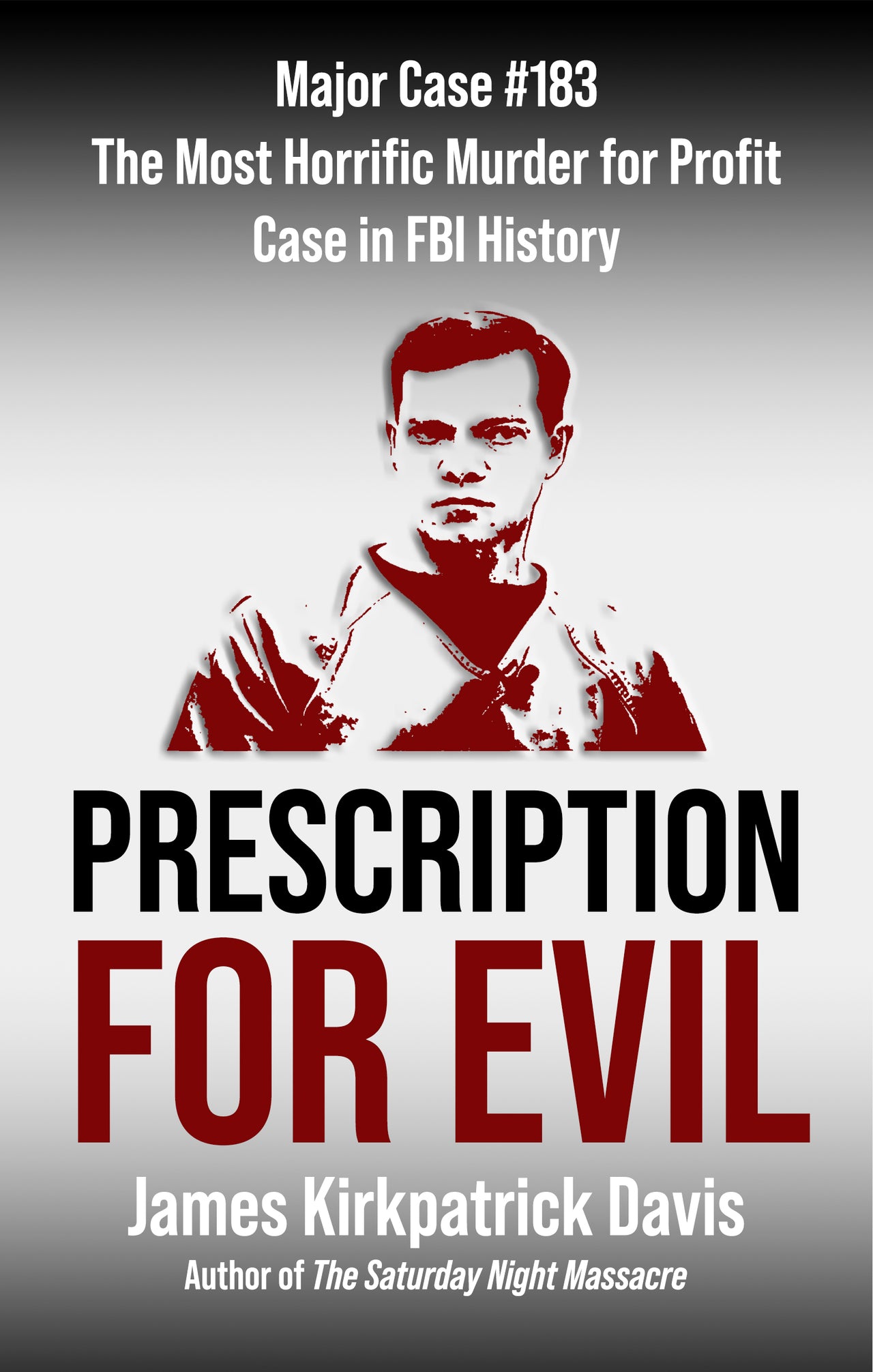
James Kirkpatrick Davis
Prescription For Evil (Paperback)
$15.95
"Prescription for Evil" is the story of the most horrifying FBI case in American medical history. It begins on May 27, 2001, when a nurse in a Kansas City doctor's office sends a vial of chemotherapy medicine called Taxol to a lab. When the results come back on June 12, 2001, it's a shocking revelation. The Taxol sample from the lab contains only about one-third of the amount of medication the doctor had prescribed. This is a dangerous situation because diluted medicine could lead to severe, even deadly consequences.
In September 2001, the FBI starts a new case called "Diluted Trust," which quickly became their top priority under the leadership of FBI Director Robert S. Mueller III. As they dig deeper, they uncover a disturbing truth. A pharmacist named Robert Ray Courtney had been diluting chemotherapy drugs for years, making a huge profit. But the real tragedy lies in the human cost. More than 4,200 patients were affected, with at least 40 known deaths. This was an unprecedented case in American medical history.
"Prescription for Evil" takes you on a heart-pounding journey through the FBI's pursuit of Robert Ray Courtney and the devastating impact he had on thousands of patients and their families. “Prescription for Evil” is a must-read that will keep you on the edge of your seat.


Mark G. Hewitt DBA
Profiled: The Zodiac Examined (Paperback)
$18.95
The Search Continues....
Following up on the meticulously detailed research of HUNTED: The Zodiac Murders (Book 1), PROFILED: The Zodiac Examined (Book 2) goes beyond the case files to develop a comprehensive criminal profile that examines the personality, psychology, physical characteristics, and motives of the Zodiac. Based in the same detailed research of HUNTED, PROFILED sticks to the facts and articulates at every step how the conclusions of the profile were reached.
At the time the Zodiac was committing his crimes, the term “serial killer” had not yet been coined, and psychological profiles were practically unknown. Now, using 21st century crime analytics and a sophisticated understanding of serial killers, it is possible to create a comprehensive profile that may help identify the kind of man who could commit these terrible crimes and get away with it for decades, despite an overabundance of evidence that should have pointed directly to him.
Join the search for the killer as the evidence is compiled and analyzed in PROFILED: The Zodiac Examined.

Barney Doyle
Reckless Speculation about Murder (Paperback)
$15.50
IT’S TIME TO PUT YOUR CRIME SOLVING SKILLS TO WORK
Just between us, we know you like true crime investigations. You’ve seen every episode, heard every podcast, and now you can name the killer in the first five minutes of that cable show you’re watching… again. But how many times have you yelled at the screen, “YOU GOT IT ALL WRONG!” Well, Barney Doyle is here to tell you that they probably did.
Reckless Speculation about Murder takes on some of the most infamous unsolved cases in recent American history. From the murders of JonBenét Ramsey and Kathleen Peterson to the shootings of Tupac Shakur and Biggie Smalls, your host Barney Doyle will lead you through the evidence, give you all the facts (even the inconvenient ones), and let you decide for yourself who committed these infamous atrocities.
Disregard what you thought you knew about these crimes. Fill up your coffee cup (or wine glass), turn down Forensic Files, and take a fresh look at these notorious murders.
This is the Second Edition with an additional chapter on the Jeffery MacDonald case.

Tye Holand
Red Flag Ready
$19.95
Predators rarely begin with threats.
They begin with attention. Flattery. Trust. A favor. A secret. A boundary crossed so quietly that it hardly feels like a boundary at all.
After nearly three decades in law enforcement investigating narcotics, major crimes, human trafficking, and crimes against children, retired detective Tye Holand has seen how skilled predators identify vulnerability, manufacture trust, isolate their targets, and turn uncertainty into control.
Red Flag Ready teaches everyone how to recognize those tactics before manipulation becomes exploitation.
Built around three pillars of vigilance, Awareness, Confidence, and Preparation, this practical guide shows readers how to:
recognize grooming, boundary testing, secrecy, isolation, and manufactured urgency
trust their instincts without living in suspicion or fear
establish clear boundaries and say no without apology
recognize warning signs in dating, friendships, online relationships, and everyday situations
prepare for emergencies before panic takes over
help a friend who may be in danger
speak up and seek trusted help when something has already gone wrong
This is not a book about becoming afraid of strangers or assuming danger is everywhere. It is about becoming harder to deceive, harder to isolate, harder to intimidate, and better prepared to act when something does not feel right.
Because vigilance is not fear.
It is knowing what you're seeing, trusting yourself enough to respond, and being prepared before the moment comes.
See the warning signs. Trust your instincts. Live Red Flag Ready.

Michael A. Black
Retribution Trail
$19.95
In the vast reaches of the Indian Territory, danger rarely stays buried for long. After weeks on the trail, Deputy Marshal Bass Reeves finds himself drawn into a new and growing threat that spreads across the frontier like wildfire. A violent prison break unleashes three desperate men—killers with nothing left to lose. Led by a former Confederate colonel with fierce ambitions and old grudges, the fugitives head west with a reckless plan that could ignite trouble across the Territory.As rumors travel faster than riders, Reeves and the Lighthorse lawmen begin to piece together the trail of violence left behind. Each clue reveals a larger scheme—one involving stolen gold, rising unrest, and talk of stirring old loyalties back to life. With every mile, the stakes grow heavier, and the line between justice and vengeance becomes harder to see.Across trading posts, settlements, and lonely stretches of open land, alliances shift and tempers flare. Settlers whisper of uprisings. Merchants close their doors early. And the name of the escaped colonel begins to echo like a storm rolling in from the horizon.Set against a land where memory is long and justice rides hard, this new chapter in the Legends of the West series follows Bass Reeves as he tracks a danger that threatens far more than one town or one badge. It marks a turning point in a struggle shaping the future of the frontier—one forged in grit, shadows, and the relentless pursuit of what is right.

Ted Clark
Reverberations: 21 Classic 1950s Rock 'N' Roll Songs That Still Reverberate
$19.95
Reverberations: 21 Classic 1950s Rock 'N' Roll Songs That Still Reverberate is a journey through the golden age of rock and roll. This book dives into the stories behind twenty-one iconic songs from the 1950s that have left a lasting impact on music and culture.
From the rebellious energy of "Hound Dog" to the infectious rhythm of "Rock Around the Clock," these tracks defined a generation and continue to inspire artists today. You'll discover how "Tutti Frutti" brought Little Richard's flamboyant style to the forefront and how "Johnny B. Goode" became a rock and roll anthem thanks to Chuck Berry's groundbreaking guitar work.
The Beatles, in their early days, played almost all these songs, showcasing their timeless appeal and influence. Ted Clark's meticulous research and insight offers a fresh perspective on these classics, revealing their origins, the numerous subsequent artists who covered these songs and/or included them on their concert set lists, the movie soundtracks they have appeared on, and why they still resonate with listeners around the world.
The book explores in detail the tremendous impact that songs like “Rock Around the Clock,” “Be-Bop-A-Lula,” “That’ll Be the Day,” and “Summertime Blues” had in the UK. And Clark explains why the artists who sang these songs—Bill Haley, Gene Vincent, Buddy Holly and The Crickets, and Eddie Cochran respectively—are more revered across the pond than they are in the U.S.
Whether you're a lifelong fan of 1950s rock and roll or new to the genre, this book provides a rich and engaging look at the music that started it all. With each chapter, you'll gain a deeper appreciation for the songs that shaped the course of popular music and continue to reverberate through the decades.


Jim Christ
Right There in Black and White (Paperback)
$17.95
A serene evening walk takes an ominous turn for Kendi Liston when he stumbles upon a lifeless woman in the shadows of his apartment building. Faced with a haunting choice—to help or to protect himself from inevitable suspicion—Kendi makes the fateful decision to report the discovery. But in a world where his identity often precedes him, this single act of integrity may cost him everything.
As the investigation unfolds, Kendi becomes entangled in a web of prejudices, assumptions, and danger. Officers Regan and Crowe, both battling their own demons, approach the case with opposing philosophies that escalate tension and risk. Witness accounts and evidence intertwine in ways that challenge perceptions of guilt and innocence, leaving no character untouched by the consequences.
This gripping narrative explores the weight of truth, the complexity of identity, and the silent battles fought in every interaction. With masterful pacing and profound emotional depth, Right There in Black and White immerses readers in a world where every choice matters and nothing is as simple as it seems.


Steven W. Booth
Rise of the Triad - Penny Miller Book Four
$19.99
The Zombies Are Coming… Again.
Small town Sheriff Penny Miller and her outlaw friend Scratch managed to survive a nuclear blast in Nevada and a brutal attack on their peaceful lodge in Colorado. They head for Los Angeles, looking for a fresh start. It seems the citizens of Southern California remain blissfully ignorant of the coming war. They believe zombies are simply an urban legend.
As usual, there’s no rest for the wicked. When they find themselves in a suspiciously run Malibu rehab facility, Miller can't relax. She knows the gore is about to hit the fan. It seems that Miller can sense when zombies are near. And they’re almost always near.
When all hell breaks loose around them, Miller and Scratch must survive deadly experiments, resist an ongoing government conspiracy, and battle another horde of ravenous zombies. And that’s just for starters.

Mercury Media llc
Rod Stewart Discography Grid
$2.00
These information documents for each of the official Trade Mark of Quality releases includes the known details for each genuine TMQ title. This includes the TMQ catalogue number, artist, record title, track list, musicians, venue, recording date, master tape and record matrix info and the other particulars for each album.

Mercury Media llc
Santana Discography Grid
$2.00
These information documents for each of the official Trade Mark of Quality releases includes the known details for each genuine TMQ title. This includes the TMQ catalogue number, artist, record title, track list, musicians, venue, recording date, master tape and record matrix info and the other particulars for each album.