A clear-eyed portrait of who Jay Sebring was before history reduced him to a footnote.
Jay Sebring: Cutting to the Truth (Hardcover)
Available Format:
5.0from 12 readers
$35.95
✓ Secure checkout by Shopify · Satisfaction guaranteed
In the glitz and glamour of 1960s Hollywood, Jay Sebring stood as an icon of innovation and style. A visionary who invented men's hair care and design concepts, Sebring wasn’t just a hairstylist—he was the architect of a $100-billion-a-year industry. His revolutionary techniques and signature charm drew legends like Frank Sinatra, Steve McQueen, and Paul Newman to his chair, making him a trusted confidant to Hollywood’s elite. From inauspicious roots in Michigan to Hollywood's "star among the stars," Jay Sebring embodied the American Dream.
Yet, in a cruel twist of fate, his extraordinary legacy was overshadowed by the horrifying Manson Family murders. Instead of being remembered for his groundbreaking work and larger-than-life personality, the media painted Sebring as a symbol of Hollywood’s so-called decadence—a distortion that served salacious narratives and tarnished his name.
Jay Sebring….Cutting to the Truth, now illuminated through exclusive insights from Sebring’s family, collaborators, legal and forensic authorities, and criminal perpetrators, reveals the man behind the myth. Discover how Jay Sebring’s influence lives on, shaping our culture in ways we often take for granted. It’s time to reclaim his legacy from the shadows of his tragic end and celebrate the dazzling contributions that made him a Hollywood pioneer and historical figure.
A firsthand account of life inside a marriage that concealed one of America’s most disturbing killers.
SMITTY: My Marriage to Serial Killer Charles Schmid, the Pied Piper of Tucson (Hardcover)
Available Format:
$26.95
✓ Secure checkout by Shopify · Satisfaction guaranteed
SMITTY: My Marriage to Serial Killer Charles Schmid, the Pied Piper of Tucson unveils an unforgettable tale of love, betrayal, and survival. Diane Schmid thought she had found her Prince Charming when she met Charles Schmid, a charismatic and mysterious man who swept her off her feet as a teenager in the mid-1960s. But her fairytale quickly unraveled when her husband was arrested for multiple shocking murders that captured national attention.
Set against the backdrop of a rapidly changing America, this deeply personal memoir recounts Diane’s journey from a young girl in love to a woman facing unimaginable revelations. Through vivid memories and unflinching honesty, Diane reveals how she navigated a life overshadowed by her husband’s heinous crimes while striving to protect her family and find peace.
Written with co-author Marshall Terrill, this book offers a unique perspective on one of the most infamous cases in American history, shedding light on the devastating human cost of living with such a dark secret. Blending gripping storytelling with heartfelt reflection, SMITTY captures the strength of a survivor who chose to share her voice after decades of silence.
SMITTY is a compelling and haunting read for those who seek a deeper understanding of resilience in the face of unthinkable events.
Before Jay Sebring became a victim of the Manson murders, he was a Hollywood trailblazer who transformed men's hairstyling and built a remarkable career among the biggest stars of the 1960s. Drawing on family archives, firsthand accounts, and extensive research, Marshall Terrill and Anthony DiMaria reveal the man behind the headlines, exploring his life, legacy, and the misconceptions that followed his death.
Jay Sebring: Cutting to the Truth (Trade Paperback)
Available Format:
5.0from 12 readers
$26.95
✓ Secure checkout by Shopify · Satisfaction guaranteed
In the glitz and glamour of 1960s Hollywood, Jay Sebring stood as an icon of innovation and style. A visionary who invented men's hair care and design concepts, Sebring wasn’t just a hairstylist—he was the architect of a $100-billion-a-year industry. His revolutionary techniques and signature charm drew legends like Frank Sinatra, Steve McQueen, and Paul Newman to his chair, making him a trusted confidant to Hollywood’s elite. From inauspicious roots in Michigan to Hollywood's "star among the stars," Jay Sebring embodied the American Dream.
Yet, in a cruel twist of fate, his extraordinary legacy was overshadowed by the horrifying Manson Family murders. Instead of being remembered for his groundbreaking work and larger-than-life personality, the media painted Sebring as a symbol of Hollywood’s so-called decadence—a distortion that served salacious narratives and tarnished his name.
Jay Sebring….Cutting to the Truth, now illuminated through exclusive insights from Sebring’s family, collaborators, legal and forensic authorities, and criminal perpetrators, reveals the man behind the myth. Discover how Jay Sebring’s influence lives on, shaping our culture in ways we often take for granted. It’s time to reclaim his legacy from the shadows of his tragic end and celebrate the dazzling contributions that made him a Hollywood pioneer and historical figure.
SMITTY: My Marriage to Serial Killer Charles Schmid, the Pied Piper of Tucson (Paperback)
Available Format:
5.0from 3 readers
$19.95
✓ Secure checkout by Shopify · Satisfaction guaranteed
SMITTY: My Marriage to Serial Killer Charles Schmid, the Pied Piper of Tucson unveils an unforgettable tale of love, betrayal, and survival. Diane Schmid thought she had found her Prince Charming when she met Charles Schmid, a charismatic and mysterious man who swept her off her feet as a teenager in the mid-1960s. But her fairytale quickly unraveled when her husband was arrested for multiple shocking murders that captured national attention.
Set against the backdrop of a rapidly changing America, this deeply personal memoir recounts Diane’s journey from a young girl in love to a woman facing unimaginable revelations. Through vivid memories and unflinching honesty, Diane reveals how she navigated a life overshadowed by her husband’s heinous crimes while striving to protect her family and find peace.
Written with co-author Marshall Terrill, this book offers a unique perspective on one of the most infamous cases in American history, shedding light on the devastating human cost of living with such a dark secret. Blending gripping storytelling with heartfelt reflection, SMITTY captures the strength of a survivor who chose to share her voice after decades of silence.
SMITTY is a compelling and haunting read for those who seek a deeper understanding of resilience in the face of unthinkable events.
Nothing in Common
$35.00
✓ Secure checkout by Shopify · Satisfaction guaranteed
PROLOGUE
Seven in the Morning
The phone rang at approximately 1 a.m.
John Calley reached for it slowly. Studio presidents do not like phone calls at that hour. At one in the morning, someone is panicking, threatening to walk or a production is hemorrhaging money. Whatever the reason, it was 99.9% sure to be bad.
“Yeah?”
“John.”
It was Steve McQueen.
Calley sat up in bed.
He knew that voice. Calm, but tight. No wasted air.
“I love this script,” McQueen said.
That was not something Calley heard very often. More often than not, McQueen called to complain about a screenplay and explain, in colorful terms, why he had no business making the picture. So, when he praised a script without hesitation, Calley knew it meant something. Their friendship stretched back more than a dozen years to The Cincinnati Kid in 1965, when Calley worked as an associate producer under Martin Ransohoff.
Calley’s career trajectory closely mirrored McQueen’s. By the time Calley arrived at Warner Bros. in 1969, he was already on the rise. Over the next 13 years, he advanced from executive vice president of worldwide production to president and then vice chairman, helping transform the studio into a Hollywood powerhouse. Under the leadership of Calley and his fellow executives, Warner Bros. enjoyed one of the most remarkable runs in its history, releasing landmark films such as The Exorcist, A Clockwork Orange, Blazing Saddles, Dog Day Afternoon, Mean Streets, All the President’s Men, Deliverance, and the Oscar-winning Best Picture Chariots of Fire.
Calley, one of the most universally respected men in the film industry, didn’t interrupt.
“I want to do it,” McQueen declared.
There was a beat.
“I want to meet you at the studio at seven.”
Seven.
It was barely six hours to prepare.
The screenwriter, John Binder, would later retell the story almost with disbelief.
“John Calley told me he gets a phone call at like one o’clock in the morning from Steve saying, ‘Listen, I love this script. I wanna do it, and I wanna meet you at the studio at seven o’clock in the morning.’”
Calley showed up.
You don’t keep Steve McQueen waiting.
By seven that morning, in a Warner Bros. conference room that still smelled of burnt coffee and carpet cleaner, McQueen leaned forward and talked about a carpenter in Malibu like it was the most important role of his career.
Within weeks, the film would be suffocated by an old contract and an obstinate film executive.
But in that room, at that hour, it was alive.
And that is where this story really begins.
Chapter One
Market Street and the Man Who Said Yes
Before the 1 a.m. phone call, before executives entered the fray and before the project was killed, there was an office building in Venice, California, where scripts were judged on instinct, not pedigree.
Market Street Productions did not look like a pipeline to Warner Bros. It looked like a postcard for the California lifestyle – literally a block from the beach. It was the kind of office people dreamed of coming to work.
Salt air drifting in through cracked windows. Sand tracked onto the carpet. Writers showing up in denim jackets with envelopes tucked under their arms like lottery tickets. A producer who offered encouragement rather than soul-crushing admonishments.
Joe Bucz got his Hollywood start in the mailroom at the William Morris Agency in 1974. He read scripts for superstar agent Stan Kamen, who represented the likes of Steve McQueen, Warren Beatty, Barbra Streisand, Diane Keaton, and Gregory Peck. Bucz was quickly promoted as an assistant to Lenny Hirshan, executive vice president of the motion picture department.
A year later Bucz moved on as a script reader for Market Street in 1975. Before long, he caught the attention of the magnanimous Bill, who hired him as one of only two associates. The role came with more than just responsibility: Bucz was given his own office in Bill’s Art Deco building and the keys to a classic Mustang convertible that Bill owned.
“It was such a great situation down there,” Bucz recalled in 2026. “Just so many people filtered through there. It was a constant cavalcade of writers marching through our office.”
Tony Bill had built something rare. He did not hide behind agencies. He did not filter everything through legal departments or secretaries. He did not demand treatments.
“All the screenwriter had to do was come down to his office in Venice, see his secretary, sign a release form, and he would accept their script,” Bucz explained.
In buttoned-up 1970s Hollywood, this bordered on heresy.
Executives preferred packaging of top-notch actors and directors. Bankable writers. Agents with leverage. Development memos. Coverage reports layered on top of coverage reports.
Tony Bill preferred nerve.
“Tony didn’t believe in treatments,” Bucz said. “He thought that if someone had an idea for a script, go ahead and write the script. He didn’t even bother with treatments.”
Bill confirmed it without apology.
“To tell you the truth, that’s not the first or only time I’ve done that,” Bill said. “I did that with The Sting. I’m drawn to first timers. I don’t need somebody to write the script before they write the script.”
That was not bravado. It was philosophy.
Bill believed a first draft carried something later drafts lost — urgency, hunger, risk.
And that belief is what brought screenwriter John Binder into the room.
Binder did not arrive as a hot property. He arrived as a writer with a sample and a pitch. At the time, he was in his mid-to-thirties.
“I was born in 1940,” he said. “So, I was 36 or 37 at the time I wrote Nothing in Common.”
Binder had studied film at NYU during the most volatile years of American cinema. He had been around directors Martin Scorsese and Jim McBride. He had worked with Michael Wadleigh on Woodstock, a film that helped shape the counterculture.
He had also drifted through Robert Altman’s orbit, worked with him as an assistant on Buffalo Bill and the Indians (starring Paul Newman) and got a lot of rewrite work. He had also written many westerns and was, by his own description, “into kind of macho stuff at the time.”
Binder also devoted considerable effort to developing an ambitious historical miniseries about George Washington. Conceived to coincide with America’s Bicentennial celebration in 1976, the project aimed to capitalize on the nation’s renewed interest in its founding history. Despite its timely subject matter and historical significance, the miniseries ultimately never moved beyond the development stage, leaving it as one of Binder’s most intriguing unrealized projects.
He had also penned a script for Robert Altman based on Peter Gent’s 1973 novel, North Dallas Forty. Drawing heavily on Gent’s own experiences as an NFL wide receiver, the semi-autobiographical novel became a bestseller for its unflinching look behind professional football’s glamorous facade, exposing the physical toll on players, the pervasive drug and drinking culture, and the ruthless business practices that defined the sport.
North Dallas Forty was originally slated to be Robert Altman’s next feature, with Binder’s screenplay moving steadily toward production. But those plans unraveled after Altman’s latest film, Buffalo Bill and the Indians, proved to be a critical and box-office disappointment, prompting North Dallas Forty to stall in development.
Joe Bucz, a voracious reader who grew up in the Chicago suburbs of Willow Springs, happened upon the script. He tore through it in a single sitting and immediately recognized its potential, convinced it deserved a second chance on the big screen.
“I was the biggest football fan alive,” Bucz said. “Binder had written an adaptation of North Dallas Forty. I told Tony, thumbs up, this guy can write.”
That endorsement got Binder into Tony’s office.
His pitch was deceptively simple: construction workers in Malibu. A foreman named Duke. A former debutante navigating a life of privilege. And a wealthy Malibu family that will never have to worry about making ends meet but can’t quite figure out how to manage the life their money has bought them.
Binder remembers the meeting as almost shockingly straightforward.
“It was very simple,” he said. “Tony just said he really liked it.”
There were no development charts. No whiteboard diagrams. No three-act debates. Bill wrote him a check on the spot. Binder went home, rolled up his sleeves and started writing.
The 125-page script came fast. He believes it took about a month. When he presented it to Tony Bill, there wasn’t much critique or notes attached to improve the script.
“I don’t remember that we even had a meeting about changing anything,” Binder said nearly fifty years later.
Ironically, although Nothing in Common would eventually land in Steve McQueen’s lap, John Binder never wrote the screenplay with him in mind. In fact, his only encounter with the actor had come years earlier during a chance meeting at a small Malibu sandwich shop.
“There was a small restaurant on Pacific Coast Highway called Bagela, and I’d stop there once in a while to grab a sandwich,” Binder said. “I was waiting in line to place my order, and two young women were ahead of me. I also sensed someone behind me. I turned around and it was Steve McQueen.”
Binder resisted the temptation to introduce himself. Instead, he ordered his sandwich, found a seat, and quietly observed. McQueen, clean-shaven and without the beard or long hair he sometimes wore when not on a movie set, settled in with a beer.
The two women ahead of Binder happened to be nurses. At first, they chatted casually about work, but the moment they realized who had walked into the restaurant, the conversation changed completely.
“When they saw Steve McQueen, they froze as any woman in her late twenties might,” Binder said. “They whispered, ‘Oh my god – Steve McQueen!’ They talked like that to each other and peeking at him. I was amused. Steve was very much aware of them and came over to talk to them. I mean, you could feel they were excited and full of electricity.”
What struck Binder most was McQueen’s demeanor. Rather than basking in the attention, he put the spotlight on the women, asking about their jobs, their lives, and listening with genuine interest.
“It was such a small place that I could actually hear their conversation,” Binder said. “He was very nice and gentlemanly, and I could tell he was amused by them because he winked at me a few times, understanding the poignancy of the situation. He left before I finished my sandwich and the women were just ecstatic.”
It was a memorable encounter, but nothing more. Binder never imagined McQueen would one day become the leading candidate for Nothing in Common.
“I had nobody in mind,” he admitted, though Binder does recall thinking Fred Ward, then a relatively unknown actor with two film credits to his name, might be good in the part.
Binder wrote about the men he recognized in Big Rock, an eastern Malibu neighborhood near Topanga Canyon he saw most mornings. These were mostly blue-collar males who understood the rules of the world even if they resented them. Duke was not a rebel. He was not a dreamer. He was a man who knew the house he built would never be his.
“I’d see construction crews and well-heeled beach residents every day in Big Rock,” Binder said. “That contrast sparked the premise for Nothing in Common.”
There would be no triumphant crossing of class lines. No sentimental resolution. Binder always believed in that clarity.
“I always thought it was worthy,” he said in 2026. “I can’t think of anybody better for the part than McQueen. I worked closely with Paul Newman. And while Paul was a very nice man, he was not a working man. Steve McQueen was the ultimate working man – the motorcycle and the masculinity. And women just loved him. He was intriguing. He wasn’t a Hollywood actor who was playing a carpenter. He was a guy you knew who had done that type of work in the past.”
When Bill read the finished draft, he felt it immediately.
“I really loved it,” he said. “It was everything I hoped it would be.”
That sentence matters.
Because Tony Bill was not easily seduced by premise. He had co-produced the Academy Award-winning The Sting and produced Hearts of the West, a 1975 “sleeper” film starring Jeff Bridges, Alan Arkin and Andy Griffith. He understood structure, tone, and risk.
If he loved it, it meant the script carried something harder to define — restraint.
He knew exactly who could play Duke.
“Steve McQueen was the obvious choice,” Bill said.
That was not star-chasing. It was casting instinct.
By the mid-1970s, Steve McQueen was the most bankable movie star in the world. After the collapse of 1971’s Le Mans, a daring racing film which had nearly cost him everything, he had rebuilt his dominance.
The Getaway (1972) made $36 million worldwide on a $3.3 million budget. His back-end deal on the heist film earned him millions.
Papillon (1973) and The Towering Inferno (1974) secured his throne and his financial future. The two films left him more than $20 million richer, and with the breathing room that kind of success can buy.
But something inside Steve McQueen had changed.
For years, he had viewed Hollywood with a healthy dose of suspicion, seeing the film business for what it often was: a town driven as much by ego, politics, and power as by creativity. Success had brought him wealth, influence, and worldwide fame, but it had also left him increasingly disillusioned. The constant attention, the game playing during negotiations, and the pressure to maintain an image had begun to outweigh the thrill that first drew him to acting.
Life in Los Angeles only reinforced those feelings. Celebrity was the city’s main currency, but McQueen understood how fleeting it could be. One hit could make a star. One flop could erase him. He had clawed his way to the top and knew better than anyone that fame was temporary.
“I’ve only got five or six years to make big money,” McQueen said. “Oh, maybe I’ll be really lucky and be another Jimmy Stewart – last twenty years or more. But it isn’t likely. Three bad pictures and they start giving me smaller dressing rooms.”
It was classic McQueen. Blunt, funny, and completely honest.
He still loved the craft of acting. What he no longer loved was everything that came with being Steve McQueen. The studio politics, the public expectations, the photographers waiting outside every restaurant, and the feeling that every move had become part of a performance all weighed heavily on him. By the late 1970s, he was no longer interested in proving he was Hollywood’s biggest box office attraction. He was searching for roles that meant something to him, free from the machinery that had helped create his legend.
Binder did not know any of that when he wrote the part of Duke.
Tony Bill did.
“It was a little less active than many of his roles,” Bill said. “But he could have done it.”
Less active. More interior. A man who understands boundaries. For someone who had clawed his way from reform school to a Malibu home perched above the Pacific Ocean, the idea of proximity without belonging was not theoretical. It was lived.
That is how a script born in a Venice Beach office traveled to the desk of the most powerful star in Hollywood.
And that is how, one night after one in the morning, the phone rang.
Nothing in Common releases April 2, 2027. Order yours today!
At one o’clock in the morning, Steve McQueen called Warner Bros. president John Calley with a rare declaration: he loved a script. By seven, McQueen was on the studio lot, talking about a Malibu carpenter named Duke as if the role might become one of the most important performances of his career. Within weeks, the film was dead.
In Nothing in Common: The Unmade Film Steve McQueen Could Not Make, acclaimed biographer Marshall Terrill uncovers the long-buried story of the movie that captivated McQueen at a crucial turning point in his life, then vanished into the machinery of Hollywood. Based on a rediscovered screenplay from 1977, firsthand interviews, industry memoirs, and Terrill’s decades of research into McQueen’s life and career, this richly detailed account reconstructs a lost production that came heartbreakingly close to happening.
Written by John Binder and championed by producer, director, and actor Tony Bill, Nothing in Common was not the kidnapping thriller some McQueen historians had assumed. It was a sharp, humane character piece about Duke, a weathered construction foreman, and the blue-collar crew renovating a beach house for a wealthy Malibu family. As the workers move through a world of privilege, glamour, ease, and quiet dissatisfaction, they discover that being invited inside is not the same as belonging. For McQueen, who had built his screen legend on cool defiance and working-class authenticity, Duke was more than a part. It was a mirror.
Terrill traces the project from Tony Bill’s open-door Venice office, where young writers could still walk in with a script and a prayer, to the executive suites where enthusiasm collided with contracts, ego, money, and fear. McQueen was then one of the biggest stars in the world, fresh from The Getaway, Papillon, and The Towering Inferno. Yet even his power could not overcome the obligations tying him to First Artists, the star-driven production company formed to give Hollywood’s elite more control over their careers. What began as artistic liberation had become a legal trap.
The result is more than a behind-the-scenes Hollywood mystery. Nothing in Common is a portrait of Steve McQueen in transition: restless, wary of fame, newly drawn to quieter material, and searching for roles that felt honest after years of playing the icon everyone expected him to be. It is also a story about the fragile life of a film before cameras roll, when passion, timing, personalities, and paperwork can determine whether a masterpiece is born or buried.
With the narrative drive of a thriller and the intimacy of a backstage confession, Terrill brings readers into the rooms where Nothing in Common almost became real. He illuminates the people who believed in it, the forces that stopped it, and the haunting question at its center: how could the most bankable movie star in the world be unable to make the one film he desperately wanted to do?
For film lovers, McQueen admirers, Hollywood historians, and anyone fascinated by the movies that might have been, Nothing in Common restores a missing chapter to the Steve McQueen story and gives an unmade film its long-overdue close-up.
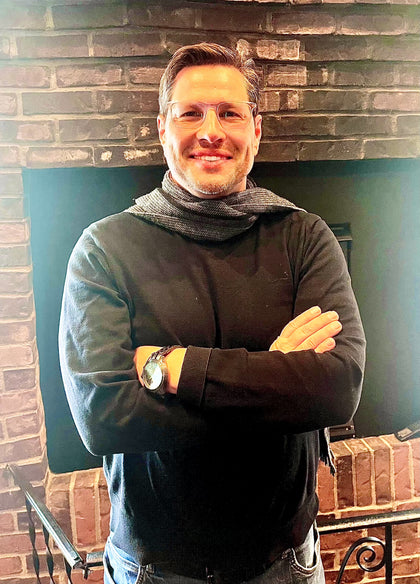
Meet Marshall Terrill
Marshall Terrill is a writer and journalist who has chronicled the lives of cultural icons including Steve McQueen, Elvis Presley, Jay Sebring, and others whose fame intersected with crime, power, and consequence.
He is known for deeply researched true crime and cultural history, focusing on the human, social, and ethical dimensions of real events. His work explores how individual lives collide with larger systems and cultural moments, approaching these stories with care, context, and a commitment to understanding rather than sensationalism.
Click to learn more about Marshall Terrill ↓
A little bit of how Marshall thinks
What draws you to stories...?
What draws you to stories that sit at the intersection of crime, culture, and celebrity?
Well, it’s a wonderful combination now isn’t it? Think of all the great celebrity trials of the past involving crime – Fatty Arbuckle, Charles Manson, Lyle and Erik Menendez, OJ Simpson – it’s like a magical combination that is endlessly fascinating because of all the cross-currents. It unlocks worlds where you’re usually not permitted or is something that allows you access to places that are unknown. In a strange way, you also get a peek into how the law works, so I believe there’s an element of being able to learn something and apply it to your knowledge. Lastly, these stories often lead to spectacle, which means that the truth is often more surreal than fiction.
What’s the moment you know there’s more here than the headlines ever showed?
When you’re researching a true crime story, what’s the moment you know there’s more here than the headlines ever showed?
When you actually get to talk to people who were involved in the crime or get to know a loved one who knows the perpetrator or victim. When you can reveal something to the public for the first time or offer up what perhaps really happened beyond headlines. I enjoy nuance and objectivity, so if you can inject that into your story, you can show true authenticity and balance.
How do you balance empathy...?
How do you balance empathy for real people with accountability for real harm?
That’s easy – people aren’t born monsters. They essentially grow into the role as a result of how they were raised, if there were any guardrails in place, and how circumstances unfold. You demonstrate the good and the bad – show both sides of the person. As a narrator, I don’t like to point people in one direction or another but let your sources offer their opinions and let the facts speak. I’m old school in that I don’t want the news to offer opinion but rather simply state what happened. Treat readers as smart, and they’ll pick up on what’s what.
What responsibility does a writer have...?
What responsibility does a writer have when telling a story that still affects living people?
To quote people as accurately as possible, offer facts but not opinions, demonstrate balance and detail to the story.
What do insiders see that outsiders usually miss?
You often work closely with people who lived inside these stories. What do they see that outsiders usually miss?
They can offer lots of great details and context that a prosecuting attorney cannot because they know the person inside and out. For example, in working with Charles Schmid’s widow, Diane, she lived with “Smitty” and knew him over a 10-year period. She not only knew him but all the other players in the book. That kind of inside knowledge is vital in the telling of the story. I think we captured something very special in the book as a result.
What surprised you most...?
What surprised you most while working on SMITTY? The fact that we were able to finally tell what Smitty’s life was behind bars and how he was killed. The other books (there were two) on the Schmid case ended in 1967 after the second trial and then added a coda in 1975 that he was killed in prison. However, they were never able to explain how or why he might have been killed. We were also able to obtain police reports, letters from Smitty to Diane, journalists and the warden at Arizona State prison in Florence and his poetry – lots of poetry – that give true insight into Smitty’s thinking. We also were able to give context through Arizona history and backstories. We truly captured something special.
How do you decide what not to include...?
How do you decide what not to include when the material is overwhelming or disturbing?
I also go based on what is personally interesting to me. If I find the material interesting and helps the reader in their understanding, then it stays. I remember when I wrote a chapter in the Schmid book and after I finished I said to myself, “That is the darkest thing I’ve ever written in my life.” It was about Smitty’s life behind bars and the darkness and brutality of life in a state penitentiary. However, I didn’t sugarcoat anything or cut anything out because I wanted readers to take that journey with Smitty. And the most amazing thing was – they were either going to empathize with Smitty or say, “He deserved every bit and more for what he did to those victims.” There is no middle ground on that chapter.
What do you hope readers understand...?
What do you hope readers understand differently after finishing one of your books?
That it was researched as thoroughly and honestly as possible. Or at the very least, has a different take and makes you think about the story in an alternative way.
What keeps you returning to long-form storytelling...?
What keeps you returning to long-form storytelling when shorter, louder formats dominate the conversation?
It’s what I grew up with and what I know. I don’t mind movies that slowly unravel as long as it captures your attention. It’s the same with books. Readers shouldn’t be cheated if you take a little longer to tell your story. I don’t think I will ever be accused of that.