Through The Shadows (Paperback)
5.0
from 9 readers
$19.95
✓ Secure checkout by Shopify · Satisfaction guaranteed
Chapter 1
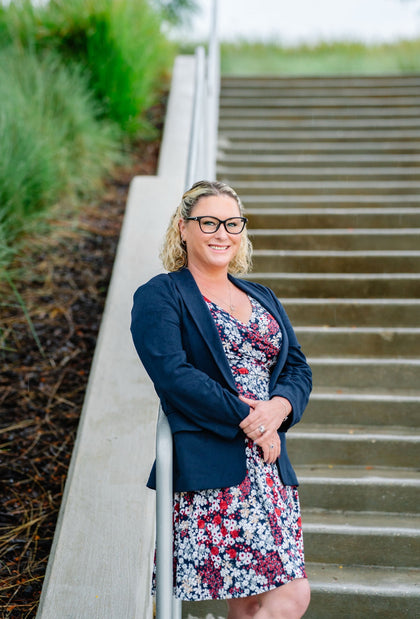
Hello, My Name is Lauren
Picture this: It's early 2018, and I'm just minding my own business, maybe binging on too much Netflix. And, suddenly, a metaphorical door swings open—like in those cheesy motivational videos your aunt keeps sharing on Facebook. Except, spoiler alert: Instead of leading to self-discovery or a career in motivational speaking, it invites me into the chaotic world of true crime podcasting. Yes, me. A total amateur.
At first, I thought, “Wow, what a fun little distraction!” Who doesn’t want to delve into the dark corners of human nature? So there I am, diving headfirst into this domain without any training, degrees, or even a clue about audio editing. Just a burning curiosity and a fierce desire to share tales that are equal parts fascinating and disturbing.
Before I dive too far into this story, I need to introduce you to Ken—my knight in shining armor, though his armor is more paint-chipped than polished and his bravery was rooted in the sturdy reliability of a 1998 GMC Sierra pickup truck. Ken has been my unwavering co-host and partner in both my podcasting adventures and the rollercoaster of everyday life.
A chance encounter facilitated by a mutual friend cemented our friendship through shared laughter, effortless conversations, and buffalo chicken wings. At first glance, he was not what I deemed "my type"—he was older, composed, and inherently good-natured. As I reflected on my past romantic entanglements, a pattern emerged, one painted with the hues of heartbreak and mistreatment. Ken stood in stark contrast to the men of my past.
It took a couple of months, but eventually, I made the first move. Believe it or not, Ken is shy, despite what you may think after listening to our podcast! I got tired of waiting for him, so I just went for it, and I am glad I did! He’s stuck with me now.
Enough of the mushy stuff. I convinced Ken to start this true crime podcast with me. We named it Paradise After Dark. You’ll understand the name better as you keep reading. But seriously, how hard could it be? We would research a case and record ourselves talking about it. Pretty simple, right? I bought cheap gaming headphones on Amazon, downloaded a free audio mixer on my laptop, and we got started.
And, oh boy, did I quickly learn that my lack of podcasting credentials raised quite a few eyebrows. Friends probably wondered if I’d lost a bet or if I was experiencing some midlife crisis too soon. Meanwhile, I’m over here thriving on chaos, experimenting with sound bites, and learning about audio editing. What I thought was a podcast could often pass for a crime scene investigation—or at least that’s how my early recordings sounded.
But you know what? Every awkward moment and every editing mishap became a stepping stone. My passion for sharing these stories became my best guide. And while I couldn’t tell you a single thing about “proper” podcasting, I could tell stories that kept listeners on the edge of their seats (or at least awake during their daily commutes).
So here I am, an accidental podcaster, navigating this uncharted territory with way more enthusiasm than technical skill. And honestly? Who needs a textbook when you’ve got a unique fascination with the human psyche and an endless supply of riveting tales to share? Welcome to my world!
But let’s peel back the layers, because it turns out that behind every chilling episode is a world of research that would make a detective proud. Forget just sitting in front of the mic and rolling with it. This job is more like being on a never-ending treasure hunt, where the treasure is buried under mountains of police reports, witness statements, and, oh, let’s not forget, the charming array of YouTube videos and the dreaded Reddit threads discussing the very crimes that haunt my sleep.
Don’t get me wrong; I love diving into the twisted tales of true crime, but have you ever tried sifting through grim details for hours while trying not to lose your mind? Let’s say my laptop and my sanity are in a constant tug-of-war. I’d love to tell you that I was doing it for the love of storytelling, but, eventually, it felt more like a weird form of self-punishment.
But here’s the kicker: Through all the research, the sleepless nights, and the risk of permanent damage to my eyes and wrists, I carved out my niche in this chaotic world of podcasting. And I’ve got to admit it’s empowering. Even with all the hiccups and plot twists along the way, the belief in the stories and the connection with my audience fuels the fire.
I’m getting ahead of myself here. Allow me to introduce myself. Hi, my name is Lauren. I was born and raised in Naples, Florida. First, let's talk about Florida in general. It's the land of sunshine, shrieking cicadas, and the most bizarre news headlines known to humankind. Honestly, if there were a contest for the weirdest stories, I’m sure our little corner of paradise would win first place. "Florida Man" has practically turned into a cultural icon—who needs superheroes when you have someone wrestling an alligator while wearing nothing but flip-flops?
Growing up here, you learn to embrace the eccentricity. Who wouldn’t want to be a proud embodiment of the quirks and oddities that come with the territory? It's as if the state handed me a quirky edge and my driver's license, almost like some rite of passage. You know, “Congratulations! You can legally drive, and here’s a whole bucket of weirdness to go with it!”
And Naples. A little slice of paradise where the beaches are pristine, the sun shines bright, and the darkest secrets lurk just beneath the surface. You know, the kind of place where joggers wave cheerily at each other while sipping overpriced lattes, blissfully unaware of the drama unfolding behind the facades of those luxurious mansions.
I became obsessed with uncovering the secrets beneath the surface of this seemingly perfect town. Here I was, revealing stories that would make your jaw drop. You’d think a place like Naples would be all beach days and high tea, but nope! There’s crime, scandal, and a healthy dose of drama lurking around every corner. It’s as if the town dared me to explore its underbelly, like some ironic treasure hunt.
Let’s talk about Port Royal, shall we? The neighborhood practically screams, “Look how fancy I am!” Beneath those elegant roofs and manicured lawns, there are some crazy stories. We’re talking about bombings, suspicious disappearances, and lives shattered by addiction—all swept neatly under the plush Persian rugs, of course. After all, we wouldn’t want to ruin anyone's brunch with the grisly details.
The cases of Terrance Williams and Felipe Santos highlight troubling failures within law enforcement. Both men disappeared in the early 2000s in North Naples after having encounters with Stephen Calkins, a Collier County Sheriff's Deputy.
Santos, involved in a minor car accident in 2003, was cited by Calkins. He was last seen being driven away in the officer's patrol car under dubious circumstances. Calkins claimed he dropped Santos off at a gas station, but no formal booking occurred, and Santos has not been heard from since.
Just months later, Terrance Williams faced a similar fate. After being illuminated by Calkins and pulling into the local cemetery parking lot, cemetery staff observed the officer patting Williams down and placing him in his vehicle. Like Santos, Williams was reportedly dropped off at a gas station; however, again no incident report was filed, and Williams has not been seen since. Calkins was later fired for providing conflicting information regarding both disappearances.
Despite national attention, a wrongful death lawsuit against Calkins lagged in meaningful results, culminating in a judge dismissing the appeal and making Williams' mother pay Calkins’ legal fees.
The question remains painfully obvious: Where are Terrance Williams and Felipe Santos, and how many more cases like theirs are buried beneath bureaucracy and indifference?
And then there’s the unforgettable tale of Stephen Benson, tobacco heir extraordinaire. Who could forget that delightful little family outing on July 9, 1985? A surprise pipe bomb in the family car adds a touch of drama to the typical butterflies and sunshine narrative. Just a little inheritance squabble gone awry—who hasn’t been there?
And speaking of mysterious circumstances, let’s discuss Robert Ludlum, the author who brought us Jason Bourne. Now that’s a plot twist! Did he spontaneously combust while sitting in his recliner in his high-rise apartment? Or was it a case of mixing too much drama with your cocktail, darling? His wife was in the kitchen preparing a fresh drink while the firemen doused her poor husband?
So, here I am—a proud product of Florida. Call me unconventional, call me ironic, call me whatever you want. I’ve learned that, sometimes, the things we can’t have, like a perfectly normal life, are exactly what we need to uncover the fascinating messiness of reality.
As a 12-year-old, I was captivated by shows like Forensic Files and books like Mind Hunter, written by the renowned John Douglas, which sparked my interest in criminal psychology. This has shaped my worldview, as I now see potential profiles and motives in every news story and crime scene. I see it as a puzzle waiting to be solved.
I’ve always loved reading books, so it’s no surprise that I’m now writing one. I started with R.L. Stine’s Goosebumps series—nothing quite screams “I’m a budding horror aficionado” like a green book with a giant eyeball on the cover. We thought that was high literature back in fifth grade, didn’t we? From there, I graduated to the Fear Street series by R.L. Stine, which was essentially the same as Goosebumps but featured teenagers instead of children. I loved it.
And then, in my teen years, I jumped headfirst into the dark, twisting world of Stephen King. The "Master of Horror," they call him. But honestly, it's like calling an entire buffet “just food”—the man does so much more than scare you; he dives deep into the messy, delicious bits of human life with a sprinkle of supernatural chaos. Who knew you could get existential dread while battling a giant spider named "It," right? Sorry, spoiler alert!
But the scariest Stephen King book I have read to date is Mr. Mercedes. It isn’t about the supernatural; it's about a real person—an evil person. Evil exists in our world, and I have definitely discovered that.
Fast forward to today. My interests as a child didn’t just teach me about crime; it instilled confidence in my ability to analyze, empathize, and understand the complexities of human nature. And isn’t that a skill worth having? Whether you end up in law, criminology, or another field, your passion will always set you apart. That drive for more profound understanding makes you a potential profiler and a keen observer of life.
I honestly have no idea when or where Stephen King made this statement, but it’s always stuck with me: “Monsters are real, and ghosts are real too. They live inside us, and sometimes, they win.” I relate to this in so many ways. I think you will understand once you have read this book.
True crime isn’t merely a hobby for me; it’s woven into the very fabric of my identity. It became my lens, my intrigue, and, ultimately, my calling. Reflecting on my journey, the pivotal four years I spent as a military police officer in the Navy stand out vividly—each memory is a thread intricately tied to my understanding of humanity and morality.
As I donned my uniform each day, I witnessed things that tested every moral fiber within me. From tense military incidents to civilian disputes, each scenario left an indelible mark. The psychological depth I encountered taught me that crime is not simply an act; it’s a complex interplay of choices, circumstances, and the often-overlooked stories behind each individual involved.
Upon transitioning out of the service, I didn’t just hang up my badge; I took my experiences and channeled them into academia. I pursued a degree in paralegal studies, eager to bolster my understanding of the law—an extension of my experiences as a military police officer. This degree didn’t merely add a layer of sophistication to my narrative; it was integral in shaping my worldview.
Having worked closely with prosecutors and defense attorneys, I was granted a front-row seat to the great justice division. The prosecutors painted a world of black and white, where the rules were clear and often unforgiving. In contrast, the defense attorneys navigated the murky waters of “innocent until proven guilty,” prompting me to redefine my perception of right and wrong. This duality became more than just knowledge; it morphed into an intricate dance—a ballet of justice and humanity that I found utterly captivating.
Through these experiences, I understood that law is not a rigid script; it is a living, breathing entity. It reflects our society’s values, fears, and its myriad hypocrisies. I find this dance fascinating, a kaleidoscope of human experiences unfolding right before my eyes.
So here I am, armed with a wealth of knowledge and a passion that ignites my storytelling. As I recount chilling tales, I don’t just narrate, I dissect and analyze. I reveal the layers, exposing how the pieces fit together in a greater narrative. I am not just another voice amidst the clutter of true crime podcasts; I am a storyteller who has lived, seen, and dissected the very essence of this genre.
Ken and I knew we wanted to focus our podcast on Florida. Initially, we covered cases close to home, which inspired the show's name, Paradise After Dark. In the beginning, we didn’t limit ourselves to true crime; we also explored themes like ghosts, urban legends, and unsolved mysteries in the area. As I mentioned earlier, Florida has its quirks, ensuring we will never run out of content in these categories. We decided to kick off our first episode by discussing an urban legend from our own backyard—the legend of the squallies.
Let’s dive into this local legend from Golden Gate Estates, a rural neighborhood located in Naples, Florida. This area is known for its tight-knit working-class and middle-class families, but there’s a side that is definitely a bit more... mysterious.
Legend has it that deep in the woods surrounding this community, there’s a colony of peculiar little creatures called squallies. Imagine short, humanoid beings that sport pig-like snouts—it’s like something straight out of a storybook, right? These little guys have become part of the local folklore, and it’s said that around 40 to 50 of them still roam the woods to this day. But here’s the kicker: If they catch you, you might just end up as their dinner!
There are a couple of spine-chilling theories about how these squallies came to be. One story suggests they are the aftermath of a government experiment that went awry—think mad scientists and top-secret projects gone wrong, much like the premise of the popular Netflix series Stranger Things. The other theory is even wilder, claiming a nutty scientist created them all by himself and still protects them like some mad guardian out in the woods. Both stories agree on one thing: There is an old man who is just as crazy as they come, sitting like a guard dog over the territory where the squallies hang out. If you’re thinking about snooping around, be warned: He’s said to shoot on sight.
The area where these creatures are believed to be lurking is what folks around here call Naithlorendum Sanctuary. It’s a place that sounds enchanted but might hold chilling secrets instead. So, if you’re in Golden Gate Estates and feeling adventurous, think twice before stepping off the beaten path. The squallies might just be keeping a close eye on you!
Reflecting on the evolution of our podcast, I realize that each twist has not only shaped our narrative but also my worldview. As mentioned, initially, we focused on sensational true crime stories featuring notorious figures, ghosts, urban legends, and unsolved mysteries. However, as I delved deeper, I felt a growing responsibility to amplify the voices of those who had been silenced—families yearning for answers and friends holding on to hope amid despair.
This realization spurred a significant transition. We eventually shifted our focus exclusively to missing persons and unsolved crimes, shedding light on often-overlooked tragedies. This was more than a change in content; it was a commitment to fostering awareness and compassion. Our rebranding as Paradise After Dark: Missing & Unsolved encapsulated our mission to invoke action and support.
The overwhelming audience response validated our path. Listeners connected with stories of love and loss, and I found renewed passion—an urge to champion the marginalized. Each episode became a tribute to resilience, a reminder that hope for answers always exists.
The journey transformed me. It morphed from simple storytelling into a deep exploration of humanity and truth. Behind every statistic is a life, a family, a story begging to be heard.
This is one of the concepts that pushed Ken and I to create The Florida Themis Project. Themis, as we call it, is a non-profit organization. Themis, the Greek goddess of wisdom, good counsel, and the interpreter of the other gods' will, is widely recognized as the goddess of justice. We support loved ones and victims of unsolved crimes by providing financial assistance for investigative tools, including DNA testing, carried out by law enforcement professionals and private entities to help resolve these cases. We also assist victims' families by facilitating awareness campaigns, which may include billboards, printed media, flyers, and podcast episodes.
Fun fact: Ken is the reason this book exists. It was the spring of 2023 when I was having an identity crisis of some sort. Who am I, and what am I even doing here? I found myself navigating the complexities of life, character, and purpose—a maze I now recognize as both a blessing and a curse. I am an empath, the type of person who feels deeply and constantly, a bleeding heart that pulses with the hopes and sadness of others. This duality has been my compass, guiding me toward a destiny I have yet to grasp fully.
For so long, I believed that success was synonymous with profit. My ambitions were fueled by the need to amass wealth, to conform to a narrative that equated financial gain with personal worth. Then I stumbled into the world of true crime, and everything shifted.
As Ken and I embarked on our podcasting journey with Paradise After Dark: Missing & Unsolved, it offered us modest financial gains, but it also introduced us to an exhilarating, complex realm of storytelling that resonated with my soul. Although the financial rewards have been modest compared to what we had hoped for, what we have gained is far more immeasurable. We have forged friendships with talented individuals, traveled the world, and gathered an array of experiences that have brought color to our lives.
We had just gotten home after attending a live show featuring a couple of our podcast friends who have soared to great heights in this business. As I watched them bask in their success—crowds eagerly hanging on their every word—I felt not a trace of jealousy, only overwhelming pride. I have thrived in the warmth of their achievements, recognizing the common thread that connects us all: a passion for storytelling and the pursuit of truth.
But even amidst joy, a nagging insecurity found a foothold in my heart. What are we doing wrong? Why haven’t we sold out a live show? Will we truly make it in this industry? These concerns lingered, casting shadows on our journey, but I chose to reflect instead on what we had accomplished up to this point.
Ken provided a much-needed perspective: “You can’t confuse success with money,” he told me. It rang true. Ken reminded me that my path has been filled with incredible endeavors: multiple podcasts, extensive research, and hundreds of episodes that resonate with the voices of lives touched. I’ve fostered meaningful collaborations, traveled to conventions, and even taken the stage in Las Vegas to deliver a presentation. Those moments felt significant, far surpassing any dollar amount.
“I bet you could write a book about the Sims case,” Ken said. Ah, the Sims case. My great white whale. The murders of Robert, Helen, and Joy Sims in Tallahassee, Florida, on October 22, 1966. It was one of those unthinkable incidents that have stuck with me over the years. I will share the entire story later in this book.
After meticulously reporting on the tragic murders of Robert, Helen, and Joy Sims, I found myself ensnared by the intricate mystery surrounding their untimely deaths. Perhaps my involvement was personal—a close friend happens to share a birthday with one of the victims—adding an emotional layer to the case. Furthermore, the unsettling fact that I had engaged in multiple conversations with a primary suspect left me with an eerie feeling, making the whole situation even more consuming. Whatever the underlying reason may be, this perplexing case burrowed deep into my mind, persistently refusing to let go, compelling me to seek answers amidst the shadows.
I never considered writing a book about the infamous Sims case, despite my years of dedicated research into its captivating and perplexing details. During my exploration of the case, I found myself drawn to a different medium: storytelling through a serialized podcast titled Massacre on Muriel Court. In this podcast, I meticulously unraveled the intricate layers of the case, guiding listeners through each episode with gripping narratives and insightful analysis. Although the podcast allowed for a deep dive into the events and characters involved, the concept of transforming my extensive research and rich storytelling into a book format continued to remain an elusive aspiration, just out of reach.
I strongly believe that this case has the potential to be solved; however, I harbor a deep fear that it may never truly achieve the closure it so rightfully deserves. A former prosecutor who worked closely on that case cautioned me, saying, “The only court this case will ever see at this point is the court of public opinion.” His words resonate deeply in my mind, compelling me to reflect on the situation. Yet, despite this weighty realization, I find myself repeatedly asking: What steps can I take to make a difference?
I considered writing a book on the Sims case and capturing the many stories I've encountered. Each case we’ve explored carries significance, painting a portrait of humanity filled with heartache, resilience, and hope. I’ve met individuals whose time with me extended beyond traditional storytelling; their words are engraved in my heart.
So why not take the time to write it all down? Document the invaluable lessons learned throughout the years, account for the shadows that have been tallied, the laughter that has been shared, and the tears that have been shed along the way? I envision a book that encompasses my entire journey—one that not only reflects my personal struggles and growth but also articulates my ultimate purpose. This book would stand as a heartfelt tribute to the countless cases I have encountered, capturing the essence of what it truly means to connect with people. It would delve into the depths of their pain, celebrate their victories, and convey the profound impact that these shared experiences have had on my life and the lives of others.
This book is my roadmap to exploring my quest for value and purpose in a world that often confuses worth with wealth. Ultimately, my true success lies not in financial outcomes but in the stories that endure—that I feel compelled to share with the friends, family, and loved ones I support. The world deserves to hear these stories, and I am ready to share them. Here begins my next chapter.
Some stories won’t let go.
Lauren Samples never planned to become a true crime investigator. But when a podcast she co-hosted led her deep into the world of unsolved cases, she found herself drawn to the voices often overlooked—the families still searching for answers, the victims whose stories had faded from the headlines.
In this compelling blend of memoir and investigative journalism, Samples shares the cases that changed her, from missing persons and cold cases to the complex realities of grief, justice, and advocacy. With a background in law enforcement, a degree in paralegal studies, and a deep commitment to uncovering the truth, she brings a thoughtful and compassionate perspective to the mysteries she explores.
More than a collection of crime stories, this book is about the impact of loss, the resilience of those left behind, and the power of storytelling in the fight for justice.
For readers who seek true crime with heart, Through the Shadows: Unsolved Crimes and the Search for Truth offers an inside look at the pursuit of answers—and the people who refuse to stop searching.